The US Olympic Trials for swimming began Saturday. It’s bittersweet to watch. On one hand I’m excited to see who makes the Olympic Team for Paris. On the other hand, I miss being at swim meets cheering on my kids and spending time with other swim parents.
One of my favorite parts of watching Olympics are the stories about the athletes. Throughout the broadcast, there are personal background stories about individual athletes. When I feel a connection, or am impressed with what the athlete has overcome and persevered, I find myself invested and rooting for that person.
Although it’s not the Olympics yet, three stories stood out to me on day one of Olympic Trials:
Katie Ledecky
Also known as Katie “Freaking” Ledecky, she has earned more gold medals than Michael Phelps. From her X bio: 3x U.S. Olympic Swimmer – 7x Gold-Medalist. 21x World Champion. 16x World Record Breaker. Stanford grad.
I’ll add to that: “The greatest female swimmer of all time.”
On day one of Trials, the 27-year-old Ledecky earned her spot on the US Olympic Team by swimming the 400 Meter Freestyle in under four minutes. So now she can update her bio to say 4x U.S. Olympic Swimmer.
Ledecky has revolutionized the sport by breaking barriers and opening a path for those following her. A swim dad friend, who has two daughters who medaled at the Olympics, told me Ledecky made the impossible possible. She has opened opportunities for young girls who believe they can swim those times, too. Ledecky has made the sport faster.
Gretchen Walsh
Gretchen Walsh, age 21, added excitement to day one by breaking a world record in the 100 fly in semi-finals. This is the first world record broken at Olympic Trials swimming since 2008. She broke Swedish swimmer Sarah Sjostrom‘s 2016 world record of 55.48.
Even though she is now the world record holder in the 100 fly, she hasn’t made the US Olympic Team. She has to place first or second in finals to earn a spot — there are only two swimmers per event who make the team. I am rooting for her! Also her sister Alex, age 23, is competing in Olympic Trials, but they swim different events.
UPDATE: SHE DID IT! She’s on the team coming in first place last night at finals!!
Aaron Shackell
I watched 19-year-old Aaron Shackell from Carmel, Indiana win the 400 meter free, earning his spot on the Olympic Team. He’s young and hasn’t been in too many elite level meets. But he had plenty of confidence and speed swimming before the crowd of 20,000 at Trials held in his home state. Instead of holding Olympic Trials in a Natatorium, they built a pool in a football stadium.
During his post swim interview, Elizabeth Biesel asked when he first wanted to go to the Olympics. He said it was in kindergarten, when he learned his dad was an Olympic swimmer. Hard word since kindergarten through his freshman year of college paid off. His Olympic career is mostly likely just beginning with plenty of years ahead.
Do you watch the Olympics? What is your favorite sport to watch?
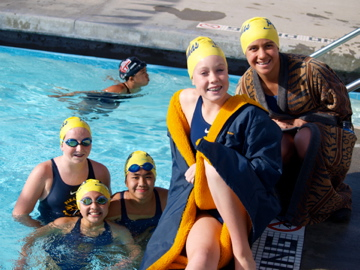
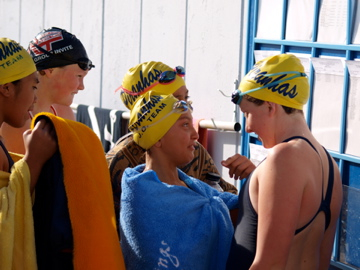
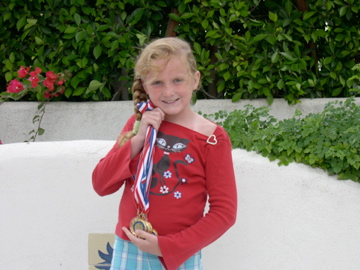
Once upon a time, we were crazy swim parents. Yes, those kind of parents.
I read an article in the WSJ yesterday that brought fond memories of those days.
It was called “A Tribute to the Inane Dramas of Sideline Parents: Who would have thought I’d miss all that groaning, whining and anguish?” by Joe Queenan.
Here’s an excerpt:
One of the worst things about watching your kids grow up is that you no longer get to witness the uniquely idiotic, yet oddly entertaining, behavior of parents at kids’ ballgames.
When my daughter started playing league soccer at age 6, parents would go out of their way to film every minute of every game. That first year, her team went winless and scoreless until the final game of the season. Decades later, the kids’ aging parents can pull those old videos down off the shelf and regale their progeny with untold hours of lovingly documented footage of utterly unproductive prepubescent athletic activity. Thanks, Mom! Thanks, Dad!
I actually miss this inanity. As a connoisseur of boorishness, I miss the anguished complaints about muffed offsides calls, the moaning and groaning about alleged handballs in front of the goal, the conspiratorial suggestions that the referee is blind.
Although I don’t miss riding the roller coaster of being a crazy swim parent — or watching parents who were downright abusive — I do miss six things about going to swim meets.
ONE
Spending time together. When you’re away for a few days with your swimmer, you have a captive audience. There’s no distraction of eight hours at school, followed by three hours of swim practice, or them hanging out with their non-swim friends. Spending lots of time together, unfettered with household, work, and daily school responsibilities is refreshing. I enjoyed our little bubble of time and treated it like a mini-vacation. We played cards, sang songs, hung out at the beach, and had fun!
TWO
Nap time. When our swimmers were older and had meets with prelims and finals, we found ourselves in the hotel — with our kids — for three to four hours in the middle of the day. They needed to be off their feet and resting. So I’d bring in lunch, relax, and enjoyed the best naps!
THREE
Walking. Being at a meet for days on end, without cooking, cleaning, working, etc. allowed plenty of time to walk. I walked during warm-ups and warm-downs. I walked with my husband, with friends, and by myself. I looked forward to checking out the areas by the pools on foot. Walking got rid of my nervous energy and walking for hours and miles had to be good for me!
FOUR
Friendships. I spent lots of hours with team parents under the pop-up tent. Mostly, swim parents are generous, encouraging and have the common interest of their team and kids’ successes at heart. I made great friends with parents from other teams — as well as swim officials. I looked forward to seeing them at meets. I remember conversations with parents when our kids were leaving for college. We shared our excitement plus our anxieties of being empty nesters. We lived in separate towns with kids on separate teams, yet had so much in common.
FIVE
Watching your swimmer race. What is it about watching your child race that is so rewarding and exciting? I’m not sure, but if you have the answer, please let me know. It was so exciting when they did well. I loved that feeling when I watched their hard work pay off and observed their growth as a person and athlete. It crushed me when goals were missed by mere tenths of seconds and our kids were disappointed.
SIX
Sushi. We ate lots of sushi at swim meets. I scouted for the best sushi restaurants near pools throughout Southern California. My daughter liked to eat sushi at meets, too. It’s healthy, light, provides her with the right fuel to race. We didn’t have a sushi restaurant at home that I liked, so sushi was a treat.
Looking back at your kids’ childhood, what do you miss?
Jon Urbanchek, Coach of University of Michigan, USC and US Olympic Team
RIP, Coach Urbanchek. He died May 9, 2024 at age 87.
“I’m not looking at how many fast times you have, or how many medals you’ve won, medals will tarnish, right? I’m looking at how many friendships you made.” -Coach Jon Urbanchek
When I was gathering stories for the SoCalSwimming History website, a swim official gave me Jon Urbanchek’s number to call. The year was 2017 and he was 80 years old. He told me how he was coaching part time at USC. I was amazed at his energy and how enthusiastic and friendly he was.
“I’m going to be 81 this year, and I still love the sport. I still volunteer coach at USC Tuesday, Thursday and Saturday because I love being with young people. I love the energy they put out. I think at my age it’s important to be active. I leave the house at 5 a.m. to get there at 6 a.m. driving through LA traffic. I’m officially retired but I’m very happy to be a part of the program. Even this year, I did the training camp for the national team. I’m still involved with the national team and USC. I want to continue on.”
I loved talking to him and learning his life story from leaving Communist Hungary, studying at University of Michigan to his decades-long career coaching.
He was a US Olympic coach on staff for ’92, ’96, ’00, ’04, ’08 and ’12. He was inducted into the International Swimming Hall of Fame, Long Beach State Hall of Fame and University of Michigan Hall of Fame.
There was an outpouring of love for him this week from the swimming community:
“It is hard to express how much Jon Urbanchek has meant to me since I first met him in 2012. He was my coach on the 2012 Olympic team and he has been a coach, a mentor and a friend since then. I learned so much from him. He was a kind and dedicated coach who never forgot his swimmers. I will never forget his dedication to our sport, his humor, his coaching style and his love for Team U.S.A. He was a coach of coaches. I know that all of my coaches learned something from him. I am so lucky to have had him as a part of my team….he never stopped coaching and encouraging me.” — Katie Ledecky, three-time Olympian, seven-time Olympic gold medalist, 21-time world champion, and holder of three world records
“I can still hear him saying “keep it moving” “ey , _____ MOVE IT!”…. Thinking about what he taught me in and out of the pool… one of the most influential ppl I’ve had in my life…this man is a legend and truly one of one!
RIP buddy…. ❤️❤️ “ –Michael Phelps, legendary American swimmer who won 28 medals across five Olympics, making him the most decorated athlete in the history of the Summer Games.
“Undeniably among the legendary coaches of our time. Better was his inclusion of all of us on our way up. Fast friend to anyone who crossed his path. If you met him you were undoubtedly added to his contact list along with a selfie together. All of us in swimming owe his wife Melanie and daughter a debt of gratitude for sharing him with us.” — Dave Salo, former U.S.A. National Team Coach and head coach at USC
“Jon Urbanchek was the Yoda to world swimming. Add on the sense of humor and occasionally needed warm hug. His wisdom grew and spread over the decades and his legacy will continue to influence future generations. We will miss his presence and carry on his spirit. ‘Go Blue! Keep it movin!’” — Mike Bottom, former University of Michigan swimming and diving head coach (2008-23)
After my phone interview with Coach Urbanchek, I would run into him at swim meets. I remember talking with him at Open Water Nationals at Lake Castaic, Calif. I was there to cheer on our daughter.
He was coaching Haley Anderson, who swam the 10k in the 2012, 2016 and 2020 Olympics. We became friends with the Anderson family, because Haley’s younger sister, Jordan, swam with our daughter at the University of Utah. Haley and her sister Alyssa made the US Olympic team in London. Alyssa earned a gold medal for the 4 X 200 free relay, while Haley earned Silver, finishing 4/10s of a second — in the 6.2 mile race — behind the winner from Hungary.
Jon Urbanchek at the 2017 Open Water Nationals at Lake Castaic.
Who has made an impact in your life like Jon Urbanchek made in the swimming world?
If you read my post on Monday, ASU won their first Men’s NCAA swimming and diving championship after almost cutting their program in 2008. I wrote about how the team’s success was due to Head Coach Bob Bowman (who was Michael Phelps longtime coach) and Assistant Coach Herbie Behm, who was one of my daughter’s coaches at Utah.
Then within 48 hours of winning the number one spot at NCAAs, social media went wild. Announcements were made from the University of Texas that Bob Bowman was named their head coach to replace retiring Eddie Reese. That came out of the blue, because amidst speculation, nobody thought Bowman would leave ASU.
At first everyone was convinced it was an April Fools’ joke.
Next, ASU announced that Herbie was being promoted to head coach. Congrats to Herbie!
That pretty much made the changes for real. Not a joke.
Now the swimming world is waiting to see what happens next. Do swimmers follow Bowman to Texas? Or, do they stay at ASU with Herbie? Time will tell.
Here are a few photos from my walk yesterday and of blooms in our neighborhood:
Did you see or hear something on Monday that you thought was an April Fools’ joke?
What are some of the fun April Fools’ joke you experienced?
In case you haven’t figured it out. I’m on TEAM HERBIE! The one who came back to his home team for his dream job. The one who isn’t ditching out after of 48 hours of a team championship to leave everyone else behind for the next step up in his career. Or worried about the next legacy or career about all him.
Shirley Babashoff with her Olympic Medals at at Southern Pacific Masters Clinic in Mission Viejo, Calif.
Legendary Shirley Babashoff, Gold Medalist Olympic swimmer, spoke out against something during the 1976 Montreal Olympics. Today we call that “thing” doping.
I was invited as a reporter to an event in Mission Viejo several years ago. Babashoff was the guest speaker. I noticed how generous Babashoff was with her time answering questions, letting attendees try on her Olympic medals and snap selfies with her. Her sense of humor, outspoken and down-to-earth answers were refreshing.
Babashoff is recognized as one of the all-time great U.S. women swimmers. She won gold at the ’72 Munich Olympics, but unfortunately, she competed against the East German women’s team in Montreal in ’76. Babashoff went public with her story in her 2016 book, “Making Waves: My Journey to Winning Olympic Gold and Defeating the East German Doping Program.”
At the event, she spoke about life after her Olympic career. When she was a swimmer, the Amateur Athletic Union, which governed swimming among other sports, kept everyone on amateur status. She said she made a cotton commercial for Arena after representing the United States at the Olympics. When she wanted to swim with US Masters (where swimmers ages 18 and compete and train — including a novice like me) she was told no — she wasn’t eligible.
She coached and taught swimming for 10 years to triathletes and children. She said had a lot of fun, “But I needed a job with benefits like health insurance, so I took a job with the U.S. Post Office as a letter carrier. I’m in Southern California on the beach and I can hear the waves crash while I’m outside at work.” Her life focused on raising her son and centered around her role as a mom.
Babashoff was asked if she swam now, and she said, “Yes, but I don’t get my hair wet.”
THE EARLY YEARSIN CALIFORNIA:
“We moved from pool to pool and I swam on lots of teams.”
At age eight, she took lessons at Cerritos College, not far from their house in Norwalk before switching to the Norwalk High School pool for Red Cross lessons and her first race. At nine years old, she and her older brother Jack joined the Buena Park Splashers. At 11, Shirley joined a team with both brothers Jack and Bill in El Monte. Jill Sterkel (who would be on her future Olympic gold medal relay team) was on the El Monte team and the coach was the infamous Don La Mont.
By age 13, they swam on a team at Golden West College in Huntington Beach called Phillips 66, sponsored by the oil company, and she swam with one of the two most influential coaches she’d have—Ralph “Flip” Darr.
“In California, where the sun shines almost all year long, we could find a meet practically anywhere. We went to meets in San Diego, Redlands, Los Angeles, Apple Valley, Lakewood Buena Park and many other cities.”
Babashoff said the weekends going to swim meets were her life. She has great memories of going out of town, playing cards and clackers with other swimmers in between races. She said she remembers going to Indio for a meet, and her family drove all the way there and back in one day because they couldn’t afford money to stay in a motel.
“I loved going to those swim meets. There were hundreds of kids at them. I saw my friends from my own team and made new friends from other teams. I got to see my competition from a wider group of girls—not just from my own club, but from other cubs that were the ones to beat.” (p. 31 “Making Waves”)
MISSION VIEJO NADADORES AND MARK SCHUBERT:
In 1971, her mom moved them to Fountain Valley which was next to Huntington Beach. Flip Darr retired and she had to find another team. She said there were only two choices that made sense at her level. She could train at the Belmont Plaza in Long Beach or “I could go with the new guy in Mission Viejo—Mark Schubert.”
She said, “I didn’t even know where Mission Viejo was, which was 30 miles away. Back then you could drive 30 miles in 30 minutes.
“We heard all these horror stories of Schubert’s workouts of 15,000 yards a day and more. I went with a couple friends from our team to try it out and it was 8,000 to 9,000 yards, similar to what we were used to doing. After a couple days, I told Mark that we’d decided to join the team. The next day practice was 15,000 yards.
“It was a way of life. Practice before school, classes, practice at the high school and then back to Mission Viejo. I had three practices a day.”
ENCOUNTERS WITH THE EAST GERMAN WOMEN:
Babashoff talked about her first big meet after joining the Mission Viejo Nadadores. “My first FINA World Championships I felt stronger, I was so excited and full of myself. We were in Belgrade, Yugoslavia at the pool to warm up and the doors were all locked. They said, ‘You can’t come in here.’ That was strange because all the nations warmed up together. But they wouldn’t let us in when East Germans were there. I knew then something was up. Super shocking to see the women. They were huge. I’d never heard of steroids, it was so foreign to me. I was very naive.”
She said that from ’72 to ’76, Schubert had to deal with the East Germans saying, “New suits, high altitude training, etc. They never said, oh we’re taking steroids. We beat them sometimes. They did testing back then, but on testing-day, the East Germans didn’t show up (if they knew they wouldn’t pass) because they had a runny nose.” She said one difference today is random testing and the athlete’s whereabouts are known every day.
The Belmont Pool on the beach, site of the 1976 Olympic Trials. My own kids competed in this pool, but since then it’s been torn down.
Schubert was hosting the event I attended and was asked to describe the ’76 US Olympic trials. He said Babashoff had “the best meet that had ever been swum.” In Belmont at the U.S. Olympic Trials, she won the 100, 200, 400, 800 free and the 200 and 400 IM. She won them all.
1976 MONTREAL OLYMPICS:
Babashoff recalled seeing President Gerald Ford for the second time in a couple months. They were in Pittsburg which was a staging area for the US athletes before they left for the Games. After he spoke at the Pittsburg Air Force Base where the athletes joined him on stage, he shook hands with all the athletes. Then he asked, “Where is Shirley Babashoff?” She said it was surreal to hear the President of the United States ask for her.
“Shirley,” President Ford said, “It’s so good to see you again.” He asked her how many events she was going to swim and he said, “Ah, just like that guy Jack Spitz.”
It was on their first trip to the aquatics venue in Montreal when she first heard and saw the East Germans at the ’76 Olympics. She said they were changing in the locker room, and heard low masculine voices. They all screamed because they thought men were in the locker room. Later they saw them with their muscles, broad shoulders and thunder thighs bigger than ever before.
The backlash in the media against Babashoff began when she told the truth about what she was seeing. From her book (p. 137), she explained the scene on her way to the team bus with the media asking questions with lights flashing, and microphones in their faces:
“Shirley, Shirley! What do you think of the East German team?”
“What can you tell us about the East German team?”
The questions were all redundant and overlapping. But I stopped for a moment and said into one of the reporters’ microphones, “Well except for their deep voices and mustaches, I think they’ll probably do fine.”
I saw some eyes widen and a couple of jaws drop. The reporters then fired off a couple of follow-up questions, which I answered basically the same way. Then I got on the bus and went back to the village to have dinner with my teammates.
Jim Montrella, Olympic swim coach who was sitting near me in the audience at this event, said he wished that USA Swimming back in the 1970s had coached or better prepared their athletes for talking to the media. He apologized and said he felt they had let Babashoff down as her coaches of the Olympic Team. The backlash she received for speaking to the media was overwhelming.
Babashoff thanked Montrella but said she was proud of what she said. “It was the truth.” She said she has a sister 13 years younger and her sister said they watched a video on how to talk to the press and that they used Shirley as an example of how not to do it.
She said it was so obvious that the East German’s were doping and everyone ignored it. She worked so hard and lost because of their cheating.
“I’m still bitter about it now,” she said. The media called her “Surly Shirley” but her teammates supported her for being outspoken about the East German team. She was the only one who spoke out about it at the time.
She said she wouldn’t have it any other way. “I learned to swim at eight years old and seven years later, I was breaking World records and swimming in the Olympics. ‘Is that the same Olympics on TV?’ I remember asking my mom after making the U.S. Olympic team in 1972.”
VIDEO OF THE 4 x 100 FREE RELAY WHERE THE US WOMEN’S TEAM WON GOLD AT THE 1976 OLYMPICS — beating the East Germans:
At the ’76 Olympics, Babashoff won four silver medals and the relay team of Kim Peyton, Wendy Boglioli, Jill Sterkel and Babashoff won the gold.
“When I’m at work and tell my co-workers that I’ve been to Morocco, Japan, Yugoslavia, etc. they think I’m lying. I loved to compete. I loved to travel. Going on all the trips, even to go on an airplane was amazing. Our family didn’t have money and that wasn’t something we got to do.”
THE RECORD BOOKS:
Babashoff said she’d like to get the records corrected for the 1976 Olympics. “The East German women swimmers sued their own country. The doping has been proven, they’ve admitted it. They didn’t have swim coaches, they had scientists and doctors. They couldn’t swim breaststroke correctly, but they were big and strong.”
The Olympic Committee told her no because it had been longer than eight years. She said the Berlin Wall didn’t come down for 13 years later in 1989, so she didn’t think the eight-year rule should apply.
“A lot of women deserve medals,” she said. “There were women who got fifth or sixth who had two or three East Germans beat them. These women are someone’s grandmothers now, and wouldn’t it be nice for them to finally get the medals they earned and share this with their families?”
The same year her book was published, a documentary came out about the East German state-sponsored doping program called “The Last Gold.”
“Weird how things happen,” Babashoff said. “I decided to work on a book 40 years later, it comes out along with a documentary about the East German’s, and then there’s controversy about Russian doping in the 2016 Olympics. It’s coincidental.”
She was asked if her son who is now grown and married ever swam. She said she tried to teach him when he was young and he wasn’t interested and wouldn’t swim for her. She recalled the time she was with him at Mission Bay in San Diego. She watched him swim like Michael Phelps.
I asked him, “What are you doing?” “Swimming,“ he answered. “Yes, but you’re really swimming. I’ve never seen you swim like this before.” He answered her, “I was afraid you’d put me on a swim team.” “Like I’d drop him off with Schubert,” she said laughing.
Most of her mail customers don’t know who she is or that she’s an Olympic star. She did, however, have a connection with the co-author of her book Chris Epstein through her route. She heard his name and recalled having an Epstein on her mail route. She asked Mrs. Epstein if she knew Chris. Mrs. Epstein said, “That’s my baby.” Another coincidence, Babashoff explained, “It turns out that his mom, who was my customer, had been at the 1976 Olympics, too.”
Babashoff swam briefly at UCLA, but the weight trainer gave her flashbacks of the East Germans, she said. The trainer worked them out so hard their legs were jello before they got into the pool. It wasn’t how she wanted to train and Shirley said, “I just had enough.” That’s when she officially retired.
Today, she still loves to travel and has a motorhome and travels throughout the country. She’s been to Mount Rushmore, Yellowstone and enjoys the time outside on her own.
About the ’72 and ’76 Olympics: “Everyone knew East Germans were doping but back then there was no way to prove it.” Babashoff says if she had to do it over again, she wouldn’t change a thing.
If you haven’t read “Making Waves: My Journey to Winning Olympic Gold and Defeating the East German Doping Program” here’s a link to Amazon to purchase Shirley Babashoff’s courageous life story:
What are your thoughts about Shirley Babashoff being outspoken about what she saw happening with the East German swimmers and the media turning against her?
This is a photo I found of Caeleb Dressel from last year. If you haven’t heard of him, he’s a seven-time Olympic gold medalist and world record-holder. I remember watching him swim years ago at meets with my daughter. They are the same age and he’s one of the top swimmers in the world.
I read something very encouraging. It was from the Wall Street Journal and here was the opening paragraph:
When are we our fastest, strongest and most creative?
Elite swimmers peak in their early 20s, powerlifters peak at 35 and equestrians later still, on average. Creativity peaks either very early in our careers or later, depending on how we think. Our ability to quickly absorb facts reaches its zenith in our late teens, while our vocabulary skills crest in our sixth decade.
This article is called: “Here’s When We Hit Our Physical and Mental Peaks: Even when we’ve peaked in one endeavor, we’re likely getting better in another written by Clare Ansberry.
I especially like the bit about our vocabulary skills improving into our sixth decade. That gives me hope.
Here’s more:
Economists, sports scientists and psychologists have analyzed Olympic performances and chess matches, as well as thousands of online quizzes to determine the average age when people peak mentally and physically. They are trying to understandhow our brain and bodies work and if there are lessons on strengthening each. Checkmate Chess players’ performance rises sharply until the early 20s and peaks around the age of 35.
The good news is that while we may have peaked in one endeavor, we are likely getting better in another.
“At every age, you are getting better at some things and worse at others,” says Joshua Hartshorne, an assistant professor of psychology at Boston College, who researches how various cognitive functions change with age.
I didn’t realize at the time I posted the photo above of Dressel (which I did because of the first words of the WSJ article “elite swimmers,”) that after almost a year off from swimming he swam at US Nationals last weekend. For swimmers, who practice six days a week, often two practices a day — a year is a lifetime.
He left the 2022 World Championships in Hungary while the meet was still going on. Everyone thought that was odd and the explanation was health reasons. Michael Phelps was one of the first Olympic athletes to talk about his struggles with mental health. I listened to Phelps discuss his battle with depression at an event and I wrote about it HERE.
Dressel returned to the pool at U.S. Nationals this past weekend, and from what I’ve read he feels like he’s in a good place and happy to be back. Although he didn’t make the US World team and was seconds off his best times (which as a sprinter is another lifetime) he has his sights set on 2024 Summer Olympics in Paris. His coach and teammates say it’s the happiest they’ve seen him in years and his presence on the team is a huge plus for everyone.
Back to the article, above. I think it’s encouraging that although we may lose some skills as we get older, other ones get better as we age. I’m also happy for Caeleb Dressel that he was able to rekindle his love of swimming and took the time to get the weight of the world’s expectations off his shoulders.
My daughter on a Utah Utes women’s swim meet poster
Every morning my husband and I get ready for our walk around 5 a.m. to avoid the heat. We don’t make it out the door for at least 30 minutes, needing clothes, clean teeth and coffee!
Consistently, we see one other couple out early. We say “Good morning!” “What a beautiful day,” and usually walk on.
During the weekend, my husband stopped to ask about their granddaughters who are swimmers. They told us their oldest signed with Northwestern and their youngest is getting calls across the country at top colleges. They talked about how they did at CIF (California Interscholastic Federation) where swimmers compete for their high school teams and how they were top finalists.
“Our daughter was a multiple CIF Champion,” my husband mentioned. Yes, she was. That’s a memory I’ll look back on with pride.
Our neighbors talked about a meet they just returned from in Northern California, the George Haines International Swim Meet. Yes, we’ve been to that meet, too. It’s filled with top swimmers including Olympians from the USA, Europe and Mexico.
Here’s a video I took of warm up from the George Haines International meet in 2017:
The conversation with our neighbors brought back so many memories from the days our kids swam. Busy days traveling to meets, staying in hotels, sitting with favorite parents on the stands. Each morning we wondered what the day would bring.
I felt a little sad and melancholy after talking to our neighbors. I’m glad we were a swim family. But there’s no going back to those days. On a sad note, the team our kids swam with from kindergarten through high school folded a few weeks ago after more than 50 years. I couldn’t count the hours we spent volunteering and supporting our team.
My daughter celebrating with her relay team at the end of a swim meet.
What memories from days past do you think about in a happy or melancholy way?