What’s wrong with participation trophies?

I wrote this five years ago and I think some of my thoughts back then are still relevant. Let me know what you think about a generation of kids being raised with participation trophies, too.

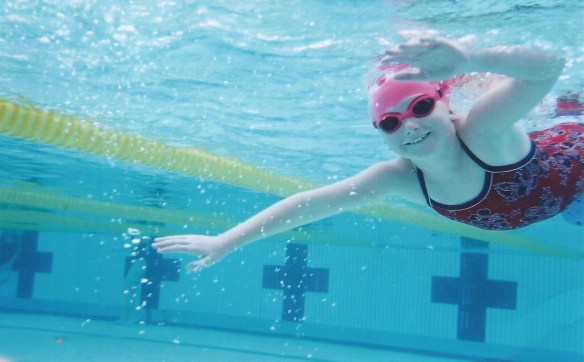
Healthy competition at a swim meet.

Healthy competition at a swim meet.

Why are our kids getting awards for showing up? Is it damaging to make them believe they’ve earned something without achieving it?

Kids instinctively know who’s the smartest in the class. They know who the fastest runners and best athletes are. By not recognizing achievement, what are we adults trying to prove? That everybody is equal? It’s not if you win or lose, but how you play the game?

Robert with friends at CSF banquet where they were recognized for academic achievement.

Robert with friends at CSF banquet where they were recognized for academic achievement. Did you know that some schools have done away with valedictorians because it’s hurtful?

An NFL star named James Harrison of the Pittsburg Steelers made headlines this summer because he returned his sons participation trophies.

“I came home to find out that my boys received two trophies for nothing, participation trophies!” the linebacker wrote. While I am very proud of my boys for everything they do and will encourage them ’til the day I die, these trophies will be given back until they EARN a real trophy,” Harrison said.

Read more here.Screen Shot 2015-10-13 at 8.21.14 AM

I believe by not having winners and losers we are encouraging mediocrity. We are telling kids that when they are older and have a job, that it’s fine to just show up and they’ll receive raises automatically. We are taking away a valuable lesson that should be learned at an early age—how to handle failure.

I think it’s great that my kids are swimmers and they learned how to deal with failure. Swimming is a pure sport. Kids are racing against a clock. It’s not subjective. It’s not judged (well, not much—there are officials that DQ swimmers for technical mistakes). The point is this: everyone does not get a ribbon, nor a participation trophy. There are winners and losers. Kids learn from this.

trophyAs a team we celebrated achievement and excellence. We held send-off parties for Junior Olympics, Juniors and National meets. We sent a swimmer to the Olympics twice—Beijing and London. We had pot-luck dinners on deck and goodie bags, special caps and t-shirts for the ones who made it to higher level meets. We had annual banquets with four awards per group. For the fastest boy and girl strictly based on time. And the coach’s awards, based on criteria such as attendance and effort.

Those were proud times for all swimmers and parents. The kids who didn’t receive awards or goodie bags did not have their self-esteem pummeled. Instead, they were motivated to achieve and work harder so they could get recognized someday, too. They cheered loudly with team pride for their teammates.

I’ve written about how failure helps kids this week on SwimSwam, and previously in What My Kids Learned While Staying Wet.

By giving everyone ribbons and medals for participation, we are holding our kids back. They aren’t learning what losing teaches—working hard, resilience, good sportsmanship, empathy and persistence.

My son getting a hug from his piano teacher for a beautifully played Clair de Lune.

My son getting a hug and present from his piano teacher for a beautifully played Clair de Lune at his senior recital.

My kids are definitely persistent, almost to the point of “stop already!” They have a never-give-up attitude that serves them well. They were never the most talented swimmers who could jump in and make finals at JOs. No, they were the ones like the tortoise, who had to work steady for years and years to catch the hare.

One of our fellow swim parents said it best:  “Do. Or do not. There is no try.”

I guess a character named Yoda said it first.

Do you have experiences where all kids received trophies at school or in sports? What’s your opinion about participation trophies? Please comment below. I’d love to hear your stories.

My daughter and teammates at Junior Olympics.

My daughter and teammates at Junior Olympics.

How to raise kids who don’t quit

180334_1867729736781_315297_n

Piano duet at a yearly recital.

In an article called “My mom’s one sports rule? No quitting,” by Samantha K. Smith on espnW.com, I remembered the t-shirts one of my all-time favorite swim dads came up with for the Piranha Swim Team, “Winners never quit, Quitters never win.” We wore those shirts with pride for years.

From the article:

“When it came to giving her children unsolicited sports advice, our mother got a lot of flack from her five kids who knew her experience was limited. The one and only story she told of her high school cheerleading days was about how the front of her skirt was longer than the back because the girl who’d previously worn it was pregnant. So we often went to Dad for help with our free throw or pitching form; we went to Mom for rides to practice, trips to the mall for new sneakers, and to locate the water bottle stash. Our mother worked late nights at the YMCA for our discounted memberships and paid our uniform and league fees without question each season. But she had one strict, abiding rule when it came to signing up for a new sport: There was no quitting.

“This was why I had new, never-worn softball gear hanging in my closet for the duration of high school. I’d ordered the uniform but remembered Mom’s tenet: If I was unsure whether I could make the full commitment, I shouldn’t officially sign on to the team.

“Now I walk into the basketball gymnasiums of my childhood and see parents storming off with their children after a bad referee call, or children quitting teams midseason because of playing time. In an age of helicopter parenting and participation trophies, my mother set out to teach us one of her most valuable lessons about commitment. If you make one, you see it through even if, and especially when, it’s not playing out favorably for you.”

I did let my son quit a few sports, but only because we had him overbooked with “if this is Tuesday it must be tennis” running from one end of the valley and back to get from piano lessons to the court. During a stressful rushing afternoon, I hit a curb, got a flat tire and realized that enough was enough. Eventually, we settled on a single sport and music. Our routine and life went swimmingly well from then on.

I interviewed the Anderson family for an article in SwimSwam magazine. The Andersons have three daughters, two are Olympic medalists and the youngest currently swims for a D1 university. The mom also had the same rule as the writer above. She said that each year she’d sign the girls up for swimming with the understanding that they were committing for the year. When the weather was no longer perfect sunny and warm and one of them asked to quit, she’d remind them that they had agreed for the year. When the new season started, it was once again warm and beautiful outside and her daughters would commit again.

There’s something to be said for sticking through it all—so long as the situation isn’t abusive or dangerous. A lot of life lessons can be learned when things aren’t perfect.

10991703_10206244656899152_1163992982021288743_o

Once we settled on one sport, things began to go swimmingly.

What is your rule for your kids and activities? Do you make them stick with it through the season? Did your parents have a “never quit” rule?

What I love about being a swim mom

I wrote this the second year of my daughter’s college swim career. It’s fun to look back on how much I enjoyed age group swimming and all that goes into it. I’m looking forward to getting back in the pool myself — after my two-month ordeal with eye surgeries end. I’m almost there! In the meantime, I miss swimming and being a swim mom.

My daughter diving in for the 1000 free during a dual meet. Utes vs. USC.

My daughter diving in (with pointed toes) for the 1000 free during a dual meet. Utes vs. USC.

We went to my daughter’s first college dual meet of the season this weekend. I loved every minute of the meet, but even more, spending time with her. She invited several swim teammates out to dinner. It felt like the sprinkle of rain after a long drought—listening to them laugh and talk about their meet and practices.

I didn’t realize how much I miss the little daily things about being an age-group swim mom.

I miss the kids hanging out. So many personalities, so many different families, all bound together by one common goal. Swimming.

My son and swim team friends.

My son and swim team friends.

I have a fierce loyalty to our team and the couple times when factions of parents split off to form their own teams, I was shocked and hurt. It felt like losing members of my immediate family. I’d always wonder why? I never thought we had a bad experience—maybe at times less than perfect—but I guess that’s part of the reason I didn’t understand.

Good times were sitting together in the stands cheering for all our kids. Getting the new team t-shirts, sipping Starbucks on a chilly winter morning under the pop-up tents. Chatting and laughing with parents while we waited to see what the day’s meet would bring. I loved working with our parents and officials under the admin tent, in awards, or in the snack bar at our home meets.

The team cheer at an away meet.

The team cheer at an away meet.

I loved having kids over to the house to hang out between morning and afternoon practices during long hot summer days. I loved cooking eggs, bacon and sausage in bulk for a pack of hungry swimmers. I was amazed at how much they could eat as a group. I loved having the team over for painting t-shirts for a big meet.

Swim team girls painting t-shirts for a meet in our back yard with their coach.

Swim team girls painting t-shirts for a meet in our back yard with their coach.

I loved listening to the kids laughing about silly things that happened in practice and the goofy songs they played and sang to like “Funkytown  and the “Numa Numa Song.”

Most of all, l I loved seeing my kids smiling, laughing and enjoying their friendships. Throughout the years, my kids were surrounded by amazing kids, families and coaches. Just being in the background was a joy.

I miss those days.

Group photo on t-shirt painting day.

Group photo on t-shirt painting day.

My daughter receiving ribbons from her first coach.

My daughter receiving ribbons from her first coach.

Humility: Is It Overlooked in Athletics?

kat group

My daughter with teammates.

Yesterday I wrote an article about the amazing role models our children have in the world of swimming for SwimSwam.com. I was pointing out three greats as examples: Michael Phelps, Kaitlin Sandeno and Ryan Lochte. Yes, Ryan Lochte.

For non swimming fans, Lochte did something amazing this past week. His suspension ended a few days ago and he won a gold medal at the US Nationals in Stanford on Sunday. He turned 35 years old the day before. He was racing kids who were 17 and 19 years old! And he won decidedly. Talk about a role model. He didn’t give up despite really screwing up and blowing it at Rio and beyond. Instead he got his life back on track and trained. He got married, has two beautiful babies and entered rehab. He showed a sense of humility and gratitude after winning the gold medal that quite frankly was missing in his youth. Here’s the video of him winning the 200 IM.

As far as Michael Phelps, I was honored to hear him speak a few years ago. He told a story of his bouts with depression and substance abuse and said at one time he no longer wanted to live. He’s refocused his life and is making a difference in the charities he volunteers for as well as being a father and husband.

I am reading “Golden Glow: How Katilin Sandeno Achieved Gold in the Pool and in Life” and she is truly inspirational as well. She was a 17-year-old phenom who earned a spot on the Olympic Team in 2000 and 2004. Through her stellar career, she faced many hardships including undiagnosed asthma, a fractured back, shoulder issues and weight gain in college. Through it all she was humble, inspiring and a joy to be around. I highly recommend the book for parents and kids! For many years, she’s dedicated time as spokesperson for the Jessie Rees Foundation, named in honor of Jessie who died from inoperable brain tumors. Sandeno visits hospitals and connects with kids fighting cancer and brings them “Joy Jars.”

What incredible role models these three are, and they all show humility. Of course there are many more in the world of swimming, too.

I found an article called “Humility in Sports–Why Does It Matter?” by Malcom Shaw, a soccer player. He has some good stuff in his article. I feel like humility doesn’t get as much attention as other traits of successful athletes like talent or hard work. Yet, it’s just as important. Here’s an excerpt:

Humility is one of the most respectable and admirable traits that an athlete can possess. The prime essence of a humble athlete is the act of selflessness and modesty which transcends to the world. Oftentimes in the realm of sports we witness many accounts of prideful behavior, whether it be on or off the playing field. Being a competitive athlete myself, I’ve watched and observed professional athletes of the highest caliber. As much as I would gravitate to their individual skills and talents, I would even more so be observant of their character and demeanor.

When athletes talk about humility and comprehensively act on it (Principle 2), they set a precedent for fostering good character.

Below are a few ways humility is exemplified and embodied in an athlete. 

Modesty

A modest athlete is one who handles character gracefully on and off the field. An individual who doesn’t excessively floss their achievements goes far in character cultivation. When they are in the spotlight, they carry themselves in a way that draws limited attention (even when there is). Modesty in a successful athlete is a trait noticed and respected by many.

Leads by example

Leading by example can come in many forms. Whether on or off the field, leadership is noticed everywhere. Being the hardest and most consistent worker, or being the only one to help clean up equipment after practice are all ways leadership is exemplified . Leadership in the world of sports is not prideful, but it looks to inspire and better others.

Lifts those around them

Athletes who embody humility take responsibility for their actions, especially when things don’t go well. In a team sport setting, there are usually situations where blame shifting occurs. Examples of blame shifting can be things such as, “We lost because of you” or “Your mistake costed us the game.” In situations like these it takes someone with humility to diffuse the problem by sharing some of the responsibility. 

27907758_939158119573690_7080556231720303254_o

Team cheer on the college swim team.

What are your thoughts about humility in today’s society?

When passion turns into a career

kat underI remember when we became a full on “swim family,” I was criticized by well-meaning friends. They’d say things like, “Your kids have such a narrow life.” “You’re limiting their world,” or “Don’t your kids need friends?” As if being in a pool full of kids, my children didn’t have friends!

Roll forward 10 years and my daughter’s heard “you can’t be focused on swimming forever,” or “why are you still tweeting about swimming?” Funny thing about that—my daughter was delighted to accept a job today that will pay her to tweet and write Instagram captions about swimming! I’m so excited for her that she found a job connected to what she loves and she’ll be able to make a living at it.

It’s okay to have a passion at an early age. As parents, when you see your kids are really into something, it’s our job to support them. Ignore the naysayers and go with your heart. How amazing is it to swim from kindergarten through college and then work at a job in the industry you’re passionate about? It may make the day-to-day grind not seem like a grind at all.

When my kids were young, we exposed them to lots of activities and they found their own paths to their interests. We never forced them to go to practice or forced them to specialize. Swimming was part of their day and they looked forward to it. My son liked to have a lot of things going on — being in school plays, forming a band, taking piano lessons, going to science fairs. His swimming passion has now transformed into rowing and he gets up before dawn to work it into his schedule. One of the many great things swimming taught my kids was a love to be physically fit for life.33944149_10156550450214612_1114497597600432128_o

What passions do your kids have and how do you support them on their journey?

My favorite things about swim meets

I wrote this five years ago when my daughter was still swimming with the Piranha Swim Team in Palm Springs. What an amazing time we’ve had as part of Piranhas since 2001. Swimming has been a vital part of our family life, and now with the kids gone, my husband and I have joined as masters. It’s fun to look back at my memories from the team. So many great coaches, kids and parents throughout the swimming community.
katdive


One of my favorite parts of being a year-round swim parent for the past 14 years has been swim meets. Not home meets, but traveling to meets. Don’t get me wrong, the home meets have their unique qualities that I’m sure I’ll miss — but, travel meets — I’ll definitely miss more.

kat at a meetThis past weekend, we were at a meet in So Cal Thursday through Sunday. Other swim parents posted photos and wrote on Facebook about how much they enjoyed the weekend and meet. My age group swim parenting days are numbered — 40 days and nights to be exact — but who’s counting? With my daughter leaving soon for college, I’m nostalgic about why I and other swim parents love meets. kat meet

My top six reasons why I love swim meets include:

  1. Spending time together.  When you are away for two to five days with your swimmer, you have a captive audience. There’s no distraction of 8 hours at school, followed by 3 hours of swim practice, and hanging out with their non-swim friends. Spending lots of time together, unfettered with household, work, and daily school responsibilities is refreshing. Enjoy your little bubble of time, treat it like a mini-vacation. Play cards, sing songs, go to the beach, have fun! You’ll look back on these days as precious memories.kat girls
  2. Nap time. When your swimmer is older, and in age groups that have prelims and finals, you’ll find yourself in your hotel — with your swimmer — for three to four hours in the middle of the day. Your swimmer needs to be off their feet and resting, so going to the beach isn’t a good choice. Nor is shopping. Bring in lunch, relax, and enjoy some of the best naps you’ll ever have!50Free
  3. Walking. Being at a meet for days on end, without cooking, cleaning, working, etc. allows plenty of time to walk. I walk during warm-ups and warm-downs. I walk with my husband, with friends, and by myself. I look forward to checking out the areas by the pools on foot. Walking gets rid of my nervous energy and walking for hours and miles has to be good for me!kat shelby
  4. Friendships. You’ll spend lots of hours with team parents under the pop-up tent. Mostly, swim parents are generous, encouraging and have the common interest of your team and kids’ successes at heart. I’ve made great friends with parents from other teams and I look forward to seeing them at the away meets. I had a great conversation this past weekend with a parent of another graduating senior. Our daughters are in separate towns, on separate teams, yet they are both swimming in college next year — and going through the same excitements and anxieties. I’ll look forward to seeing these parents in the future, during our college phase of swim meets.kat medals
  5. Watching your swimmer race. What is it about watching your child race that is so rewarding and exciting? I’m not sure, but if you have the answer, please let me know. It’s so exciting when they do well. I love that feeling when I see their hard work pay off and watch their growth as a person and an athlete.kat relays
  6. Sushi. We eat lots of sushi at swim meets. I consider myself a sushi connoisseur and I’ve scouted for the best sushi restaurants near pools throughout Southern California.  My daughter likes to eat sushi at meets, too. It’s healthy, light, provides her with the right fuel to race. My top three favorite Sushi restaurants include: bake-lobster-roll_resize

O Fine Japanese Cuisine, Laguna Beach and Irvine, CAojc_00100_resize

Zen Sushi, Lake Forest, CA, and Orange Roll and Sushi, Fullerton, CA.sunset-laguna-roll_resizeAre you a swim parent, or a sports parent? What are your favorite things about going to away meets?

robert meet

What are the worst sports parenting mistakes?

kat medals

I was listening to a webinar from “Growing Champions for Life” sports parenting expert David Benzel and he went through a list of nine of the worst sports parenting mistakes. It was during a talk about whether to push our kids in sports–or not.

Who is David Benzel? He’s a former sports parent himself, whose kids were athletic, loved their sports and made it to the pros—as he says—in spite of him. He felt like kids were coached in sports, but felt he was sorely lacking in knowledge about being a sports parent. He said that he and his wife changed throughout the years and now he coaches sports parents in many different sports including gymnasts, tennis, baseball and swimming.

I discovered Benzel on USA Swimming and have read his book from Chump to Champ, plus I have several copies of his little booklet “5 Powerful Strategies for Sport Parent Success” lying around the house in case I need a refresher.

I too changed through the years as I learned from my swim mom mistakes. I continued to grow as a parent, and looking back there are many things I’d never dream of doing today that I thought were perfectly normal years ago.

The list of 9 awful things sports parents do that Benzel presented was from the Institute for the Study of Youth Sports at Michigan State University. 

Here’s the list:

ONE
Exhibit an outcome orientation.

TWO
Are critical, negative and overbearing.

THREE
Apply pressure to win or perform.

FOUR
Make sport too serious.

FIVE
Are over-involved and controlling.

SIX
Compare child to other athletes.

SEVEN
Distract child during competitions.

EIGHT
Restrict player’s social life.

NINE
Too much sports talk.

Between me and my hubby, I think we’ve got this list covered. We’ve been guilty of every single one on the list.482023_4501677623832_667860262_n

How many on this list have you done? What are things you’ve done in the past as a parent that you wouldn’t do now?