Does IQ Determine a Child’s Success?

kat underHow our children handle adversity is more important to their success than their intelligence. I heard this during a webinar for youth sports parents, but it also applies to every day life. David Benzel, sports parenting expert, from Growing Champions for Life, discussed this and gave other gems of advice in “Overcoming Adversity in Sports and Life.” 

Benzel said, “Opportunities for personal growth usually come disguised as setbacks, disappointments and problems.” An interesting statistic he shared was that only 25 percent of success can be predicted by IQ, while 75% is because of the level of optimism, social support and the ability to see adversity as an opportunity and not a threat. So the answer to my headline question is a resounding “NO.” Our IQ isn’t as valuable as our AQ (Adversity Quotient.)

He gave examples of adversity in sports that included an injury, time off from practice due to COVID-19, not connecting with a coach, losing to an inferior opponent or being in a slump. Think of what so many kids are going through today with schools not opening, sports being cancelled. They are facing adversity like never before in their young lives.

According to Benzel, there are three types of reactions to adversity that he described as the Prisoner, the Settler and the Pioneer. The goal is to get to a pioneer mindset. That’s because the other two aren’t great. The prisoner gives up, is controlled by circumstances and feels fear and anger. The settler settles. That mindset seeks to be comfortable and feels they are doing as well as possible considering the circumstances.

The pioneer learns continuously, challenges assumptions and adjusts their strategies to succeed. They believe that they can accomplish anything if they bring light to the situation. Bringing in light makes the darkness go away. 

Here’re four tips Benzel gave to have a pioneer outlook to adversity:

  1. Listen to your adversity response. Is it fight, flight or freeze? Do your internal thoughts help you with the situation? 
  2. How can I bring light to this?
  3. Take charge of what you can control.
  4. Create a state of wonder to create a solution. Ask the question, “I wonder how I can…” Suddenly the pity party ends and your brain goes to work to find a solution.

One of the more helpful things I learned from the webinar is that optimism can be learned. So, if we’re feeling down or defeated, or our kids are, remember to ask the “I wonder how I can” question.

171176_1867727056714_561695_o

When you are faced with adversity how do you see your mindset? Do you see yourself as a pioneer in spirit?

How To Inspire Creativity in Your Kids

christmas 2

I’ve been reading about creativity in children and it made me reflect on how I raised my kids.  I’ve always considered creativity to be an innate talent, but according to science it’s a skill that can be fostered. As parents, we can promote the creative spirit by allowing space and time for creativity. That means allowing messes, free time–and getting out of the way.   I’d let my kids have a tub of large chalk and draw all over our patio. It drove my husband crazy to come home from work and see our kids and their friends drawing all over our back yard. It hosed off, though. Also, I’d buy a roll of butcher paper and let them paint or draw across the patio, hoping they’d keep it on the paper.   At the beach, they’d build villages with drip castles and loved to play chef at a restaurant. I’d patiently taste each creation (pile of wet sand) and tell them how delicious it was.   I remember taking my kids to a photographer for Christmas pictures. I had them all dressed up in their matching red and green Gymboree outfits. My daughter was a baby and my son three. My son moved all the chairs and benches into two rows all facing forward. We asked him what he was doing and he explained he was building an airplane (the two lines of furniture were the seats and aisle.) The photographer was extremely patient as I tried to put everything back in it’s place.   My mom was big on creativity and she allowed us to destroy our living room with forts of card tables and sheets, dig to China and build a pond for polliwogs. I remember making dozens of puppets with Woolite bottles as the heads and swatches of fabric for the clothing. Mom did get annoyed with me for chopping out a chunk of fabric from the center of all the yardage of fabric in her sewing room!   What exactly is creativity? Here’s a definition:   noun

  1. the use of the imagination or original ideas, especially in the production of an artistic work. “firms are keen to encourage creativity”

  Here’s an excerpt from Greater Good Magazine 7 Ways to Foster Creativity in Your Kids by Christine Carter:    

Many people assume that creativity is an inborn talent that their kids either do or do not have: just as all children are not equally intelligent, all children are not equally creative. But actually, creativity is more skill than inborn talent, and it is a skill parents can help their kids develop.

Because it is a key to success in nearly everything we do, creativity is a key component of health and happiness and a core skill to practice with kids. Creativity is not limited to artistic and musical expression—it is also essential for science, math, and even social and emotional intelligence. Creative people are more flexible and better problem solvers, which makes them more able to adapt to technological advances and deal with change—as well as take advantage of new opportunities.

Many researchers believe we have fundamentally changed the experience of childhood in such a way that impairs creative development. Toy and entertainment companies feed kids an endless stream of prefab characters, images, props and plot-lines that allow children to put their imaginations to rest. Children no longer need to imagine a stick is a sword in a game or story they’ve imagined: they can play Star Wars with a specific light-saber in costumes designed for the specific role they are playing.

Carter has a bunch of tips of things we can do to promote creativity that includes giving  kids space and resources for creative play. Also she says it’s important to allow our kids to make mistakes and fail. If they’re afraid of failure their creativity will be stifled. Limiting screen and TV time will give kids a chance for art and reading. Another bit of advice is to not tell our kids what to do. For example, I made my daughter take piano lessons for years against her will. She would have been much better off following her own passions like making mosaics and painting. For years she made gifts for her friends by getting a few supplies from Michaels and using her creativity. For a complete list of her tips, read the article here

Tracker Pixel for Entry
robkatrock

What are some of your children’s favorite creative things to do?

Christine Carter, Ph.D. is a Senior Fellow at the Greater Good Science Center. She is the author of The New Adolescence: Raising Happy and Successful Teens in an Age of Anxiety and Distraction (BenBella, 2020), The Sweet Spot: How to Accomplish More by Doing Less (Ballantine Books, 2015), and Raising Happiness: 10 Simple Steps for More Joyful Kids and Happier Parents (Random House, 2010). A former director of the GGSC, she served for many years as author of its parenting blog, Raising Happiness. Find out more about Christine here.

Pandemic Phenom: Adult Kids Flocking to the Nest

IMG_6112One thing that’s happening now during the pandemic is adult kids returning to home. Many universities offer classes remotely so kids aren’t going off to school. Other kids are working remotely and no longer have to pay for expensive apartments but can work anywhere, including at home with mom and dad. Unfortunately, some young adults new to the work force have lost their jobs because of COVID-19 shut downs. The end result is adult kids who normally would be out on their own have returned to live with mom and dad.

I’ve read several articles about his phenomenon and have included excerpts from two articles below.

From Lemore Navy News, The Meat and Potatoes of Life: The impossible task of parenting young adults by Lisa Smith Molinari, she talks about how parenting adult kids is different from having toddlers and babies, but just as hard.

I used to have a good grasp on parenting. From the time our three children were infants, all the way through toddlerhood, the primary school years, and even the dreaded teenage years, I used a fairly successful combination of expert-recommended techniques, mother’s intuition, and common sense to raise our children.

But now that they are adults, I am dumbfounded.

No one ever told me that my job as a mother would become immensely more difficult once my offspring turned into adults. In the last few years, my husband and I have discovered that, although parenting individuals over the age of majority is absolutely essential to their safety and well-being, it seems frustratingly fruitless.

To complicate matters, the global pandemic brought young adults back to their parents’ homes for the foreseeable future. College students have been forced to take classes remotely, summer jobs have been cancelled, and hiring has been suspended. With two of our three adult children back at home, we can no longer take comfort in “out of site out of mind.” We face the daunting task of trying to enforce rules and standards of conduct for two financially dependent legal adults.

Put a screaming infant having a diaper blow-out on my lap while strapped into coach seating between two grumpy business men on a turbulent nine-hour flight. Challenge me to negotiate the check out line at the commissary with a premenstrual migraine, a cartload of groceries, and a toddler having an epic tantrum over Goldfish crackers. Force me to give a lecture on why one should not wear booty shorts and a crop top to school to a smirking, gum-chewing teenager who won’t stop watching TikTok videos long enough to acknowledge me.

Pardon the pun, but that’s child’s play.

But present me with a resident 22-year-old — who wakes up at one in the afternoon, eats all the deli meat, takes a 30-minute shower, packs a duffel full of bikinis and spiked seltzers, announces that she is taking Dad’s car to visit sorority friends in Vermont for a few days, and can someone please do the laundry while she’s gone because she’s completely out of bras? — and I’m paralyzed with fear. After two and a half decades of tackling the full spectrum of child-rearing challenges, I find the task of parenting our three grown children about as easy as winning a chess match against Bobby Fischer.

Molinari talks about the issue of having different goals than our kids. This is how she lists it. It’s quite a funny list such as our kids wanting unlimited full tank of gas and the latest iphone. Parents want prohibition reinstated and a worry-free night of sleep. You can read it on her article here.

IMG_7880In How To Cope With Having Your Adult Kids Back Home from Katie Couric’s Wake-Up Call newsletter, experts give advice on how to handle families being back together due to the pandemic.

The coronavirus crisis has upended all of our lives in unthinkable ways, and for many of us, that means a rearrangement of our living situation. To help our Wake-Up Call newsletter (subscribe here!) adjust to this unique situation, our good friends Mary Dell Harrington and Lisa Heffernan of Grown and Flown spoke with us about the surprising number of adult children they’ve seen moving back in with their parents.

Together, they offered some advice on how to make the most of this transition — plus psychologist Lisa Damour jumped in to explain why some adult children may tend to act a bit less like adults and more like children when they first move home…

Wake Up Call: You both have adult children. Have any of them moved back in?

Mary Dell: I have two young adults who have moved back home with us, and my nephew, who’s in college and who we are guardians for, is also with us. It’s five people… so that means it’s 15 meals a day. It’s shocking! I don’t actually have to cook 15 meals a day but I am cooking a big huge dinner every night, and it’s something I am so out of practice with. It’s a really full house.

Lisa Heffernan: We’ve actually done the reverse. I had my mother move in, because I was so worried about where she was living, and the chance of infection. Since older people are much more susceptible to this, our kids have had to stay away. But they will come over and sit at the end of the garden, about 20 feet from us, to say hello.

What advice do you have for parents hoping to set boundaries and establish rules with their adult children?

Lisa Heffernan: Our natural inclination as parents may be to go back to “our house our rules,” because last time your child lived with you they were a child, both in maturity and in the eyes of the law. It’s really important in this moment that we come to agreements with our kids about what the rules are going to be and how we’re going to do things, as opposed to flipping back in time to the moment when we made the rules.

So instead of laying down the rules like you may have done with a 15 year old, try to present it as: How can we solve this problem together? For example: “I need quiet in the house between 2 and 4 p.m. because I am doing Zoom calls, and no matter where you are, when you’re blaring YouTube, I can hear it. So how are we going to make this work so I can do my work and you can do what you want to do?”

It’s almost like your kids are now your roommates, but more importantly, they’re other adults. It’s hard for a lot of parents to come to grips with this, but it’s also incredibly important to remind kids of how they’re going to fulfill responsibilities as adults in the household. Those can be things like, cleaning, shopping, and cooking. Or with my kids, I’ve said, “Here’s something you need to do for us: Grandpa is quarantined alone, so you each need to call him once a day.”

It’s about figuring out what the most important tasks are, putting those in front of your kids, and talking to them like the adults you want them to be.

Your friend and Grown and Flown contributor, psychologist Lisa Damour, also had some interesting thoughts to share with us on why our adult children might not always act their age when they move back into the house. Let’s check in with her on this…

Lisa Damour: It’s not at all unusual for young adults (and even middle-aged adults!) to regress a bit when they are around their parents. We all have well-worn patterns for how we interact with our parents, and those patterns took the form of a parent-child relationship for a long time. Put simply, it’s pretty easy for high-functioning, self-sufficient young adults to slip into acting like teenagers when they’re with their folks.

The challenge here is for the parent to not regress back to old patterns along with the young adult — especially if doing so takes the form of slipping into unhelpful interactions, such as coming down on an adult child for not helping out around the house. To do this, we should remember that all young people have two sides: a mature, thoughtful, and altruistic side… and an immature, impulsive, and self-preoccupied side.

In my experience, the side the parent addresses will be the side that shows up for the conversation. If the parent launches in with a lecture, they’re likely to get a snarky adolescent response. If the parent says, “I know you were doing a great job of splitting dorm/apartment responsibilities with your roommate before you had to come home. Now I need you to do the same thing here with us,” they’re likely to get a mature and helpful response.

katrob 1

What experiences have you had with adult children returning home because of the pandemic?


“Love Him Where’s He’s At”

ballet

My daughter in royal blue.

I ran across an interesting email that talked about motivating a student-athlete. It reminded me that motivation is internal and no matter how much a parent or coach may want to light a fire under someone — it doesn’t work that way. This is an excerpt from the email from sports parenting coach David Benzel of Growing Champions for Life:

The following situation came from a coach, but it could have easily been a parent. I was asked if there’s anything that could be done about a 14-year-old athlete who is loaded with natural talent but has lost his motivation.

The desire to work and improve seems to be missing.” said this coach.  

While this is frustrating for a coach or a parent who takes a personal interest in an athlete, the short answer is “love him where he’s at.”

Despite the urge to become a protector of this athlete’s career, you cannot give someone a “want to” if they don’t have one of their own. You can create opportunities, provide an inspiring environment, and tell uplifting stories, but a “want to” comes from the inside, not the outside. 

There’s usually a story behind the story when dealing with an athlete who has lost his motivation. It may stem from a relationship issue at home, strife with a coach, or other pressing priorities.

As parents, we need to let out kids live their lives and be cheerleaders on the side. We cannot make them do anything like a sport or piano lessons because we want it. We can manipulate and bribe, but that’s not an ideal way to build a healthy relationship. I like the advice to “love him where’s he’s at.”

I wanted my daughter to love ballet because I did. She hated it and big tears would run down her cheeks when I made her go. That was true of piano lessons, too. I really wanted her to stick it out. My son loved piano. I was already driving him, so she could have her lessons, too. She loved swimming instead. My son like swimming, too, but with severe asthma it was a battle staying well during the winter months. He’d make progress only to get sick and miss weeks and weeks of practice. His interest moved to music in high school and he formed a band and performed with his non-swim friends.

I love my kids for who they are — not for what they did. I hope they know that now.

34614_1556248309940_4797539_n

My son and swim team friends.

In what ways have you tried to motivate your kids?


What options do parents have for homeschooling?

602327_4372093584312_659699385_n

My daughter with teammates and friends during the homeschool years.

It can be overwhelming trying to decide the best course for educating our kids. With so many parents working remotely from home and schools not opening up, many parents want to explore the options available to them.

When I homeschooled my daughter for middle school, I went to a homeschool conference in Long Beach, CA called CHEA (Christian Home Educators Association) that helped me get started. Back then it was in person of course, and I was able to browse through hundreds of vendors of curriculum on every subject imaginable. I took my son with me, who is three years older than his sister. I figured he’d already made it through grades 6, 7 and 8 with flying colors and could help me select curriculum that would be as good or better than he had at our private school.

The reason why I chose to homeschool was based on several factors, including my daughter’s commitment to swimming and conflicts with her school. They were pretty strict about missing school for non-school sponsored sports or activities. Also, they piled on heaps of homework that homeschoolers don’t have to do. I loved many of the teachers, but with new administration in place, we saw changes we weren’t in agreement with.

Deciding to homeschool was a freeing experience. I remember vividly making the call to tell the school that my daughter wasn’t coming back. It was the start of an adventure. I knew several homeschool families and they directed me to a charter school that offered some in-class options as well as homeschool. They had a teacher assigned to each family that we met with to review assignments to make sure my daughter was on track. They offered standardized testing at a local college for all their students. Also, they had a huge selection of field trips such as Disneyland, whale watching, and Sea World. I was shocked when we went on our first field trip to Medieval Times in Orange County and the entire arena was filled with thousands of homeschool families.

I felt like I had plenty of support by the charter school which was Springs Charter School. Also, I hired a tutor for math because that’s not one of my strong points. I won’t say homeschooling was easy breezy. In truth, it was a lot of work and a full time job for me. But they are years I’ll never forget. My daughter told me last week that she was happy I homeschooled her. By the time 8th grade was finished, we were both ready for her to return to school and she entered our public high school.

I read with interest two articles about the decisions parents are making today to educate their children from home. Here’s an excerpt from Pandemic parenting: How do you pick a good online education option? by Marc Istook from WFAA an ABC News station in Dallas, TX.

Search google for “online educational content” and you’ll find 126,000 results. That just goes to show how many options parents have to choose from.

The pandemic has seen an increased need for these resources as parents try to help educate their kids during school closures and uncertainty about the fall.

But Lauren Minor, a former teacher and curriculum creator, explained it doesn’t have to be a stressful crisis of choices.

“Sometimes we can get paralyzed in this fear of making a decision, worried we’ll make the wrong one,” she explained. “Every option has the opportunity for the child to be successful.”

That provides some comfort, because it can be stressful trying to pick one option. Between ABC Mouse, Khan Academy, PBS Kids, Sesame Street and so many others, choices abound.

Whether it’s education-focused videos or just content to keep your kids entertained and moving, there seems to be something for everyone. Which is why it’s important to know your own child’s needs.

“What do they easily engage with?” Minor asks. “Are they more tactile? Do they like working with their hands? And then, what excites them? Do they get really excited about and feel successful when they complete a workbook page or do they feel really excited and successful when they complete a science experiment?” 

Those are the questions parents should try to answer when making their plan. 

Fortunately, many subscription-based offerings allow for a trial period. Minor explained that’s a great way to see what works for your family.

“I would recommend looking into a few trials right now and seeing which ones your child really engages with and feels successful in doing.”

76014_10150089816544612_743743_nThe

The other article I read discussed the different types of options for homeschooling, like the charter school option we selected to forming learning pods at home.

Growing interest in true, hands-on home school options as school year nears by Amanda del Castillo at ABC7News.com in the Bay Area discussed how parents can homeschool. Here’s an excerpt:

SAN JOSE, Calif. (KGO) — It’s no secret the pandemic is pushing parents to become more involved in their child’s education.

Education experts say the move toward true home schooling is growing across the state, and right here in the Bay Area. The approach is different from the distance learning expected this fall, as it’s known to be more hands-on.

While navigating options for education during COVID-19 may seem overwhelming, the Homeschool Association of California (HSC) said there’s proof that more parents are pivoting to homeschooling.

“Distance learning and homeschooling are two different things,” HSC board member and secretary treasurer, Jamie Heston told ABC7 News. “With distance learning, you are tied legally to a school. They’re telling you what you need to do. They’re directing the education.”

She continued, “True homeschooling is when you are directing the education. That doesn’t mean that you have to do everything yourself. That can encompass using classes, or tutors, or other parents.”

Heston said parents are able to use online class curriculum and other resources to find success.

“So, you’re directing the education but you’re not necessarily doing all of it yourself,” Heston added.

She also serves as a moderator of several local home school groups, and is a home school consultant.

Heston explained she usually points parents in the direction of Charter Schools. It’s a public school option that offers resources, and teachers to support homeschooling.

“Generally, for families who are going to just home school for a short time and pop back into school… I usually recommend using a charter because that’s still a public school, but you’re doing the day to day work at home.”

According to the article, it states the charter schools have huge waiting lists, but I think it’s still worth checking out. They may have alternatives and several different programs still available.

The article gave advice to comply legally in California for homeschooling, which is important.

“Create a small private school in your home, which is how I’ve always home schooled,” she said. “And that’s filing the private school affidavits and keeping a few things on file. The government has no say in how private schools are run. So, you have a lot of decision making and a lot of responsibility as a small private school.”

The Home School Legal Defense Association (HSLDA) lists three options to comply with California’s Home School Law:

  • Option 1: Homeschooling as a home-based private school
  • Option 2: Homeschooling with a private school satellite program (PSP)
  • Option 3: Homeschooling via instruction by a private tutor

In the South Bay, A TEAM Homeschool Community Executive Director Ann Wolfe said the pandemic is forcing parents to become more involved.

“Parents are more engaged, more on-board,” Wolfe told ABC7 News. “Listening to their kids, and not just expecting somebody else to do all the educating.”

She’s home-schooled for nearly 20 years.

“A friend and I decided to start our own,” she said, referring to the A TEAM program. “And we brought in teachers to teach those things that we didn’t want to teach. We started in our homes and then eventually went into facilities, church facilities, and expanded our programs.”

Now, Wolfe provides support for home-schoolers.

“The ranges from everything from PE to physics, and from Kindergarten through 12th grade,” she explained. “Ao people can pick and choose- a la carte- whatever classes they want, whatever days they want, to round out their homeschooling curriculum.”

About the growing interest, Wolfe explained, “I just see all these Facebook groups popping up- Pandemic Pods.”

“People coming on home school groups that have been around for a while and asking, ‘Hey, what do I do about this? How do I home school legally?’ And all these different questions,” she told ABC7 News. “I’ve received emails from people saying, ‘I’m considering homeschooling for the fall. Can you tell me something about your program? Or how do I do this?’ And so, a lot more interest in homeschooling that I’ve never really seen before.”

35645_1520560497767_2438958_n

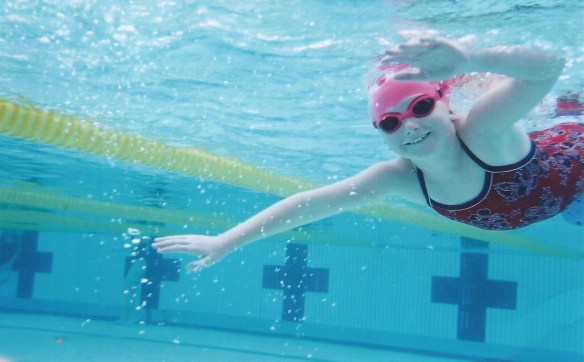
The swim team offered lots of fun times with friends, teammates and coaches.

Have you considered homeschooling during the pandemic? If your schools aren’t reopening what are your plans?

Which is better? Old school vs. new school parenting?

17879924_10213157779242890_1125954675310359057_o

Me and my big brother.

Which is best? The way we were raised, back when parents weren’t involved and we roamed free all over the countryside? Or, how parents are doing it today, attending every sports and piano practice, totally focused on our children’s every move?

According to Deon Price in an article in the Daily Republic called “This Youth Generation: Is ‘old school’ or ‘new school’ parenting best for raising a child?” he compares the two styles and it’s kind of funny to look at how different they are.

For example, many adults remember when it was okay for teachers to paddle kids at school. (I remember the boys were the ones getting paddled. I don’t really remember that technique used on girls except for one teacher who liked to showboat.) Parents were allowed to do that too, and some used a belt rather than a paddle. Today, I think “Alexa” or a neighbor would call the cops on a parent that whipped a child. My parents weren’t into punishment or maybe my brother and I were just pretty darn good kids.

Here’s an excerpt from the article:

Speaking with parents, youth and anyone raising children, I pose the question: Does “old school” or “new school” parenting work best for the proper upbringing of a child?

This discussion often gets even deeper when it begins to penetrate the surface into different cultural and socio-economic environments. Parenting styles quite often drastically differ, depending on the generation. What is considered strict old-school “tough love” would be considered excessive or maybe even abusive to some. What some modern parents call nurturing and bonding may be considered babying.

What is obvious is that our environment has changed, which has inevitably affected the way parents deal with their children.

Here are just a few examples:

Having an opinion vs. talking back: New-school parenting supports the gesture of “allowing a child to voice his or her opinion.” Old-school parenting says, “You better know when to hold your tongue or you may lose it.” Or, “Don’t let your mouth write a check that your behind can’t cash.” I believe in a healthy balance between the two. At least explain the reason for your parenting decision and ask if your children have any questions so that there are no misunderstandings.

Butt whipping vs. time-out: Time-out is what new-school parents use to deal with inappropriate behavior by a child. Old-school parents use butt-whipping – and as one parent put it, “You also got a lecture during that whipping.” There is a strong opposition against any physical discipline of a child. Some are simply calling it violence and abuse regardless. That in my personal and professional experience is ridiculous. When progressive discipline is in place, the child’s response will determine the level of discipline that should be applied. As a balanced, responsible parent, it’s good to remember to discipline with love and not anger. Never discipline a child while you are angry. Maybe it’s a good idea for the parent to take a time-out before they decide on a butt-whipping.

“Yes sir” vs. “What”: According to one old-school parent, “Children respond back to their parent(s) and/or elders by saying ‘what?’ In my day, if my dad called one of us and we answered with ‘what?,’ we were in for it.” The new-school style has gotten a little soft when it comes to expecting respect from children. “Yes sir” or “Yes ma’am” when responding to an elder person was mandatory. It’s rare to hear the words sir or ma’am from today’s generation of children.

I remember being outside most of the time as a child. Do you remember that, too? We hiked through the woods hacking a trail with machetes or rode for miles on our bikes to visit friends. Evenings were spent playing a softball game called workup where the older kids dominated and I stayed in the outfield forever. It was boring, but it was the place to be under the street lights. Doing all of this was usually without our parents knowing or caring where we were. We came back to the house when we were hungry.

Whether you prefer old school, new school or a combination, there is no black-and-white, clear right or wrong way of parenting. However, it is wise to discerned how we perform the duties of the most critical role on the planet. Please share your thoughts.

16252474_10212368448990127_286308515515991930_o

My kids in a more structured life centered around swimming.

What are your thoughts about old school vs. new school parenting? What style do you most closely follow? 

Is mom-shaming ever ok?

randk 5We all have strong opinions about our kids and when our parenting style or our child is criticized we’ll have strong reactions. Mom-shaming happens. I experienced it more than once as a parent from complete strangers and from family members. I certainly hope that I didn’t shame other moms. We know that our kids aren’t perfect and we aren’t perfect either. A lot of parenting is trying to learning through experience and knowing that every single day, we’ll face new challenges. Sometimes we make it up as we go.

Sometimes a well-meaning relative or friend will offer advice. When it’s unsolicited it’s often unwelcome. It can seem to be judgmental or condemning. The normal reaction is to feel hurt or defensive, which then leads to conflict.

I found an interesting article on a website called Your Tango by Erica Wollerman, parenting expert and psychologist, called 5 Ways To Respectfully Talk About Different Parenting Views With Family & Friends. Here’s an excerpt:

Is mom-shaming ever OK?

Mom-shaming is an inherent problem in today’s world of parenting.

As a mom and someone who works with parents very closely in my work as a psychologist, I argue that it’s vital that we avoid shaming other parents as much as possible.

While we are all human and are going to have judgments and feelings about what others are doing, I believe that it’s better not to communicate judgments in a shaming way, particularly towards parents.

And the reason why is simple: We are all doing the best we can with the information we have and the situations we are in.

I’ve never worked with a parent who simply didn’t care or wasn’t trying to be the best parent — they all want to give their kids the best life they could.

Additionally, there’s already so much pressure on parents in our culture to be perfect and to do everything possible for their kids.

In America, we lack a unified parenting philosophy that we all share and rely on the parenting advice we get from thousands of sources — podcasts, books, friends, family, TV shows, and psychologists and parent coaches.

It’s just so overwhelming to have to make so many decisions and do a job that most of us feel is crucial for our kids’ development without truly knowing for sure what the “right” choice is.

randk 6The author has specific tips and some great advice. I like it when she said the most important thing is to love your child and accept them for who they are. She said to “try to match your parenting style to their personality.”

She offers five tips to respectfully talk about parenting differences with family and friends. Here are the first two:

1. What works for one family won’t necessarily work for others.

The idea of “that’s great for you and it’s just not for me” is a good approach to start with when talking about parenting differences with other parents.

If you approach other parents’ decisions from the place that they have the right to make their own choices and that you do, too, it can really help avoid shaming comments.

For example, if a mom is choosing not to breastfeed or choosing to stop, they 100 percent do not need a list of reasons why breastmilk is beneficial. But what they do need is your support as fellow moms.

2. We can all be good moms and not make the same choices.

There really is no such thing as a perfect parent. Everyone is going to make mistakes and make different choices on their parenting journeys. That does not mean that some are “right” and others are “wrong.”

You are all good moms, even when your choices don’t line up with each other.

randk 11

Do you have any advice or experiences to share about mom-shaming or discussing different parenting advice with family and friends?